

Employee ID badges might seem like something only large corporations, hospitals, or schools need. But for a small business or office, a simple badging program can make it easier to identify employees, create a more professional workplace, control access, and provide visitors and customers with greater confidence about who they're interacting with.
The good news? You don't need a complicated enterprise system to get started.
Whether you're creating your first employee ID program or improving an existing one, use this guide to determine what you need and build a system that's easy to manage.
1. Start With the Purpose of Your ID Badges
Before choosing a printer or designing a badge, decide what you want your ID program to accomplish.
Your primary goal might be:
- Employee identification: Make it easy to distinguish employees from visitors, vendors, and customers.
- Professionalism: Give your staff a consistent, professional appearance.
- Security: Help employees quickly recognize who belongs in your workplace.
- Access control: Use badges with proximity or other access-control technology to enter doors or restricted areas.
- Visitor identification: Clearly differentiate temporary visitors from employees.
- Brand consistency: Reinforce your company identity with consistent colors, logos, and badge designs.
For many small businesses, a badge serves several of these purposes at once. Identifying those needs upfront will help you avoid buying capabilities you don't need or overlooking features that could become important later.
2. Decide What Information Belongs on the Badge
Next, think about what someone actually needs to know when they see an employee's badge.
A basic employee ID badge might include:
- Employee photo
- First and last name
- Job title or department
- Company name and logo
- Employee ID number
Keep the front of the badge easy to read. Trying to fit too much information onto a small ID card can make the most important details harder to find.
If employees interact frequently with customers or visitors, consider making the employee's first name particularly prominent. If security is the priority, you may want the employee's photo and identifying information to receive more emphasis.
3. Choose How You'll Produce Your Badges
One of the biggest decisions for a small organization is whether to order badges from an outside provider or print them in-house.
Ordering Your Badges
Outsourcing can make sense if you have very few employees and rarely need to issue or replace badges.
The trade-off is convenience. Every new hire, lost badge, or employee change may require another order.
Printing Badges In-House
An ID card printer allows your team to create badges when they're needed. That can be especially helpful if you:
- Hire employees regularly
- Have seasonal or temporary workers
- Frequently replace lost or damaged badges
- Want greater control over badge design
- Need to issue credentials quickly
For a small office, you typically don't need the most advanced printer available. A straightforward desktop ID card printer paired with easy-to-use badge design software may be all that's required.
IDville offers complete ID card printing systems designed to help organizations get started without piecing together equipment and supplies from multiple sources. A system can include the printer, software, camera, cards, and printing supplies needed to begin producing professional employee IDs.
4. Don't Forget How Employees Will Wear Their Badges
Printing the credential is only part of the program. Employees also need a practical way to display it.
Common options include:
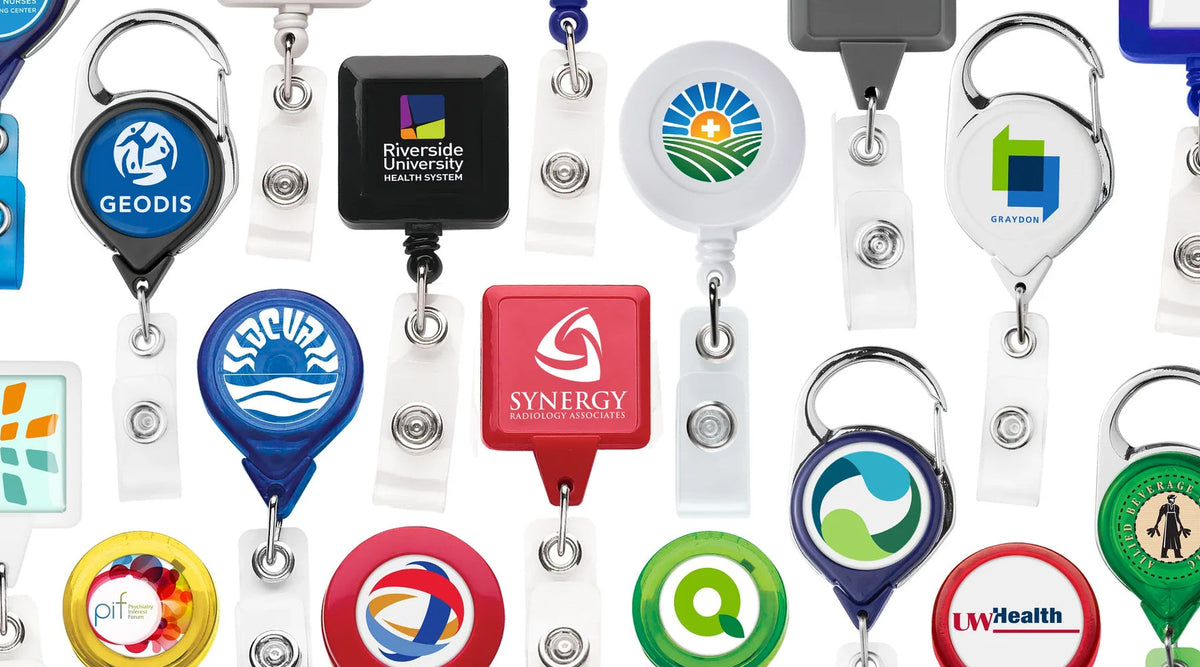
Badge reels: A good choice when employees need to swipe, scan, or present their badges regularly.
Lanyards: Keep identification visible and are useful in offices where employees are expected to display credentials throughout the day.
Badge holders: Help protect cards from scratches, bending, and everyday wear.
Badge clips: Provide a simple option for attaching a badge directly to clothing.
Think about what employees actually do during the workday. Someone who scans a badge several times a day may benefit from a retractable badge reel, while an employee who simply needs visible identification may prefer a lanyard or clip.
5. Create a Simple Process for Issuing and Replacing Badges
Even a small organization benefits from a basic badge policy.
Decide:
- Who is responsible for creating badges?
- When does a new employee receive their badge?
- What happens when a badge is lost?
- How are damaged badges replaced?
- Does a departing employee need to return their badge?
- Who has authority to issue replacement or temporary credentials?
The process doesn't need to be complicated. The goal is simply to make sure everyone follows the same procedure.
For example, a small office might assign badge management to an office manager or HR administrator. New employees receive their badge on their first day, lost badges are reported immediately, and all badges are collected during the employee offboarding process.
6. Keep Extra Supplies on Hand
Nothing slows down an in-house badging program faster than discovering you're out of supplies when a new employee starts.
Depending on your system, maintain a small inventory of:
- Blank PVC cards
- Printer ribbons
- Badge holders
- Lanyards
- Badge reels
- Cleaning supplies
How much you keep in stock should reflect how frequently you issue badges. Even for a smaller organization, keeping an extra ribbon and a supply of blank cards can prevent unnecessary delays.
7. Review Your Badging Program as Your Business Grows
The ID badge program you need for 20 employees may look different when you reach 50 or 100.
Periodically ask:
- Is our badge design still working?
- Are employees consistently wearing their badges?
- Are cards wearing out too quickly?
- Are we spending too much time replacing badges?
- Do we need stronger access-control capabilities?
- Are there areas that should be restricted to certain employees?
- Do we need a better way to identify visitors or contractors?
Treat badging as an operational system rather than a one-time purchase. A few small improvements can make the program easier to manage as your organization grows.
A Simple Badging Checklist for Small Businesses
If you're evaluating your current program or starting from scratch, begin with these seven questions:
- Who needs a badge?
- What information needs to appear on it?
- Will we order badges or print them ourselves?
- How will employees wear or display them?
- Who will issue, replace, and deactivate badges?
- What supplies should we keep in stock?
- Could our security or access-control needs change as we grow?
Answering those questions will give you the foundation for a practical badging program without making the process more complicated than it needs to be.
Build the Right Badging Program With IDville
A small business shouldn't have to become an ID card expert just to create professional employee badges.
IDville can help you put the pieces together, from ID card printers and printing supplies to blank cards, badge holders, reels, lanyards, and other accessories. Whether you're starting your first badging program or improving a system you already have, you can choose a solution that fits your organization today while leaving room to grow.
Ready to improve your employee badging program? Explore IDville's ID card printing systems and badge supplies to find the right setup for your workplace.

Leave a comment
All comments are moderated before being published.
This site is protected by hCaptcha and the hCaptcha Privacy Policy and Terms of Service apply.