
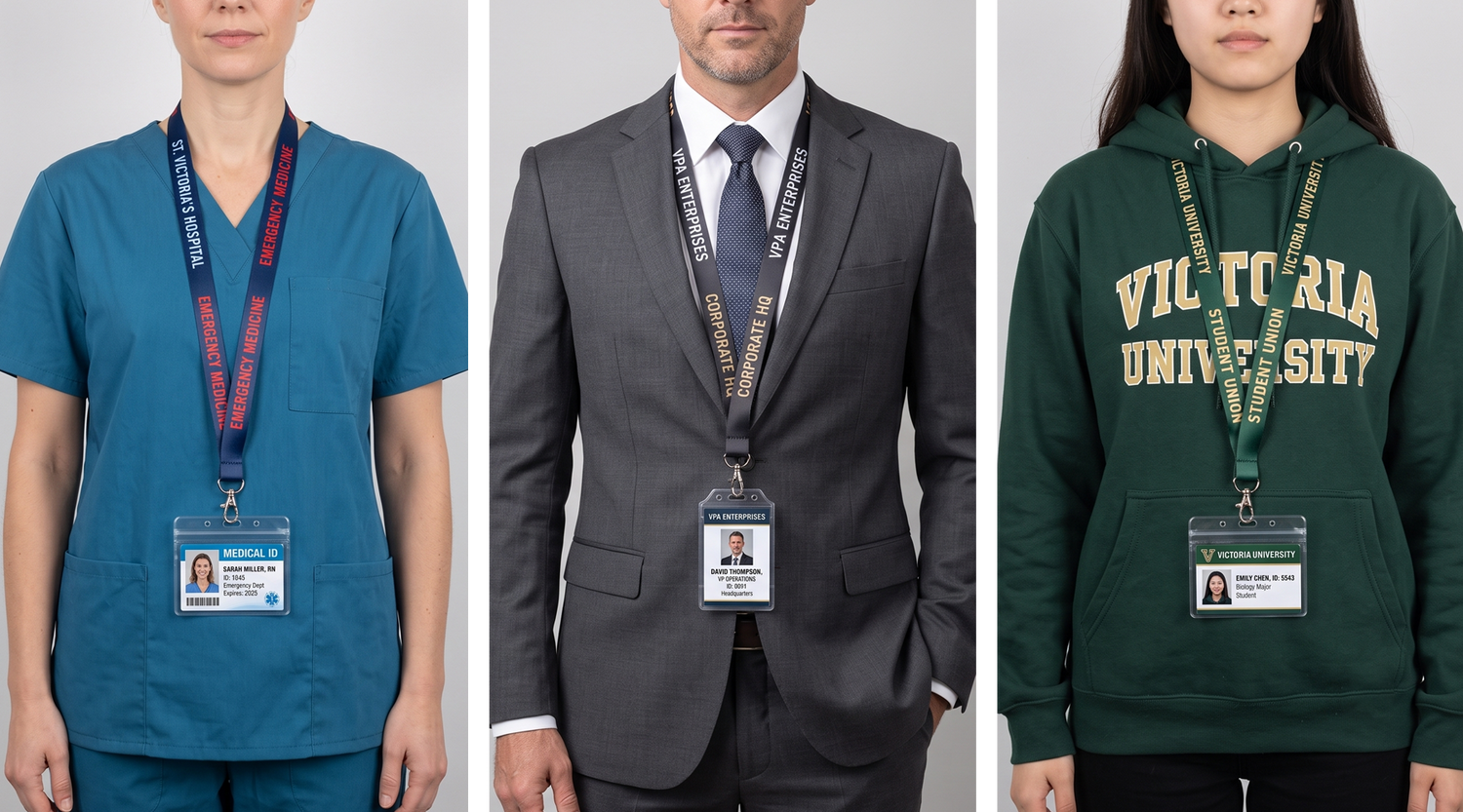
How to Choose the Right Lanyard for Your Organization
Custom lanyards may seem simple, but selecting the right one can make a significant difference in branding, comfort, durability, and cost. From print methods to fabric types and attachments, understanding your options helps ensure your lanyards work as hard as your team does.
This guide breaks down everything you need to know about custom lanyards, in plain English, so you can confidently choose the best option for your school, business, healthcare facility, or event.
What Are Custom Lanyards Used For?
Custom lanyards are commonly used to:
- Display ID badges securely
- Increase brand visibility
- Improve access control and security
- Keep credentials easily accessible
They are popular in schools, hospitals, manufacturing facilities, corporate offices, trade shows, and events because they are affordable, practical, and customizable.
Step 1: Choose Your Lanyard Print Method
The print method determines how your logo or text appears on the lanyard and how detailed it can be.
Screen Printed (Silkscreen) Lanyards

Embroidered Lanyards

Dye-Sublimated Lanyards

Step 2: Select the Right Lanyard Material
Fabric impacts both comfort and appearance, especially for all-day wear.
Cotton Lanyards
- Soft and comfortable
- Can wrinkle over time
- Available with screen printing only
Polyester Lanyards
- Soft with a matte finish
- Durable and affordable
- Compatible with screen print and embroidery
Nylon Lanyards
- Slightly firmer feel
- Shiny finish for high visibility
- Great for bold branding
Step 3: Pick the Best Attachment
- J-hooks – Easy to attach and remove, it is secure and will not open on their own
- Bulldog clips – Will prevent ID cards from flipping, but can easily open if the clip is pressed
- Split rings – Great for keys or multi-use badges, just like a keychain
How to Choose the Right Custom Lanyard (Quick Guide)
-
What will the lanyard be used for?
Daily wear, events, security, or branding all point to different materials and print methods. -
What matters most—budget, appearance, or durability?
Screen print saves money, dye-sublimation maximizes design, and embroidery offers classic durability.


Leave a comment
All comments are moderated before being published.
This site is protected by hCaptcha and the hCaptcha Privacy Policy and Terms of Service apply.