
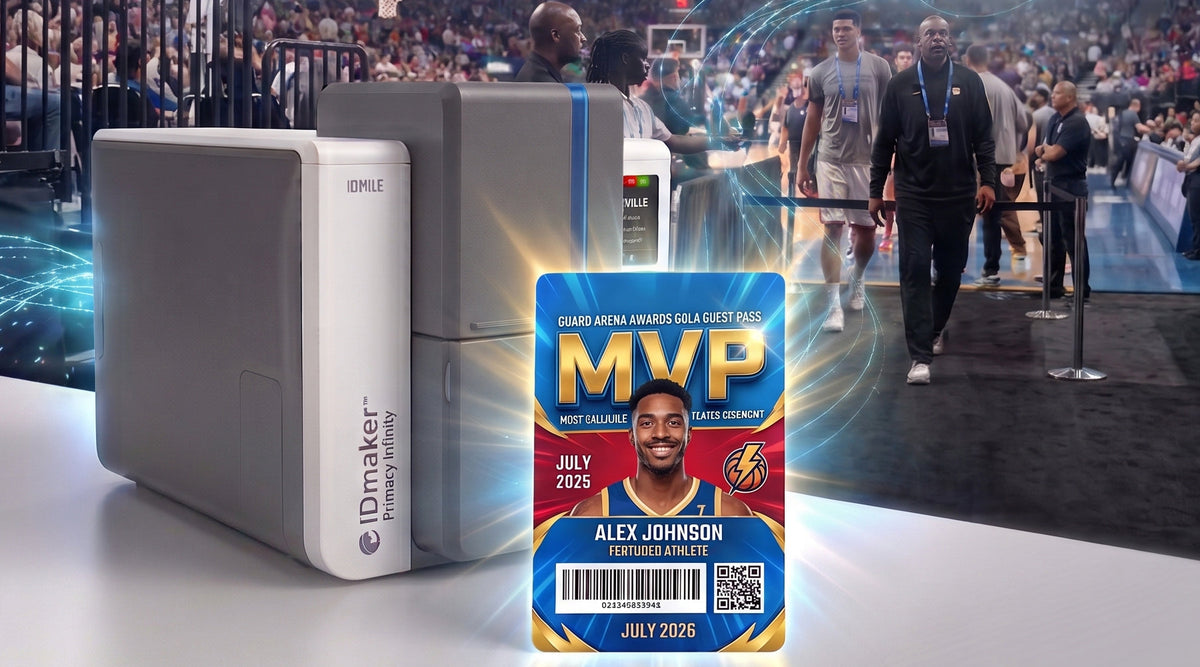
TL;DR: Why Identification Matters at Events
Identification systems are the backbone of tournament operations. They control access, verify identity, and ensure safety by making sure the right people are in the right place at the right time.
What Is an Identification System for Events?
When people think about tournament season, they think about:
- Big plays
- Upsets
- Championship moments
But behind every successful event is an identification system working quietly in the background.
An event identification system is a structured framework that:
- Verifies who the individual is
- Controls where they can go
- Defines what they’re allowed to do
At large-scale events, this includes credentials, badges, and access levels—all working together to maintain organization and security.
Why Do Large Events Require Identification Systems?
High-volume events—like sports tournaments—bring together:
- Players and teams
- Staff and volunteers
- Media and broadcasters
- Vendors and contractors
Without structured identification, events quickly lose control. Modern credentialing systems exist because they:
- Prevent unauthorized access
- Maintain order across large crowds
- Enable fast identity verification
- Support real-time security decisions
Simply put: No identification system = no operational control
How Do Identification Systems Work at Tournaments?
Identification at events is not just a badge—it’s a layered access system.
These systems typically include:
- Centrally issued credentials
- Non-transferable IDs
- Visible badge requirements
- Access zones and permission levels
How Do Teams Use Identification Systems?
Players, coaches, and staff rely on credentialed access to move through controlled areas.
Typical access includes:
- Locker rooms
- Training facilities
- Team-only corridors
- Restricted movement paths
Identification ensures each person only accesses the areas required for their role.
This is critical because:
- It protects athletes
- It prevents crowded or unsafe environments
- It keeps operations running efficiently
How Do Identification Systems Support Staff and Operations?
Behind every tournament is a complex team of personnel. Identification systems help staff by:
- Defining roles clearly
- Assigning access by responsibility
- Improving communication and coordination
When everyone is clearly identified:
- Fewer mistakes happen
- Response times improve
- The event runs more smoothly
How Is Media Access Controlled at Events?
Media coverage is essential—but highly regulated. Journalists, photographers, and broadcasters operate within:
- Approved credentials
- Zone-based access permissions
- Scheduled access windows
Credentials often include specific access zones printed directly on the badge, ensuring controlled movement and reducing risk.
Why Are Vendors and Concessions a Security Priority?
Vendor areas are often:
- High traffic
- Fast-paced
- Constantly changing
That makes them a common weak point. To reduce risk, organizations use:
- Standardized credentials
- Role-based access
- Central badge issuance
Even in chaotic environments, identification ensures accountability and safety.
How Do Identification Systems Improve Security?
Identification systems are a core part of modern event security—not just an organizational tool. A strong system helps:
- Prevent unauthorized entry
- Control access to sensitive areas
- Track who is on site
- Support incident response
Today’s event security relies on access control systems, credential verification, and real-time monitoring to create safe environments without disrupting operations.
What Can Your Organization Learn from Tournament Identification Systems?
The same principles used at major events apply across everyday environments. Identification systems are essential for:
- Schools — managing students, staff, and visitors
- Healthcare facilities — protecting restricted areas
- Businesses — securing employees and assets
- Government buildings — controlling sensitive operations
At any scale, identification helps answer the same question:
Who is this person—and should they be here?
How IDville Helps Build Identification Systems
At IDville, identification isn’t just about printing badges—it’s about building complete systems. Solutions include:
- ID card printers for in-house badge production
- Credentialing and badge design software
- Lanyards, badge holders, and accessories
- Access control credentials like proximity cards
- Integrated identification and security solutions
The goal is simple:
Help organizations create systems that are secure, scalable, and easy to manage.
Final Thought
Tournament moments are what people remember.
But systems are what make those moments possible.
And more often than not…
That system starts with identification.
FAQ: Identification Systems for Events
What is an event identification system?
An event identification system is a credentialing framework used to verify identity and control access across different areas of an event.
Why are badges required to be visible?
Visible badges allow instant identification, helping security teams quickly confirm who belongs in specific areas.
How do identification systems improve security?
They restrict access, track individuals onsite, and reduce the risk of unauthorized entry.
What industries use identification systems?
Sports events, schools, healthcare, corporate offices, and government facilities all rely on identification systems.



Leave a comment
All comments are moderated before being published.
This site is protected by hCaptcha and the hCaptcha Privacy Policy and Terms of Service apply.