
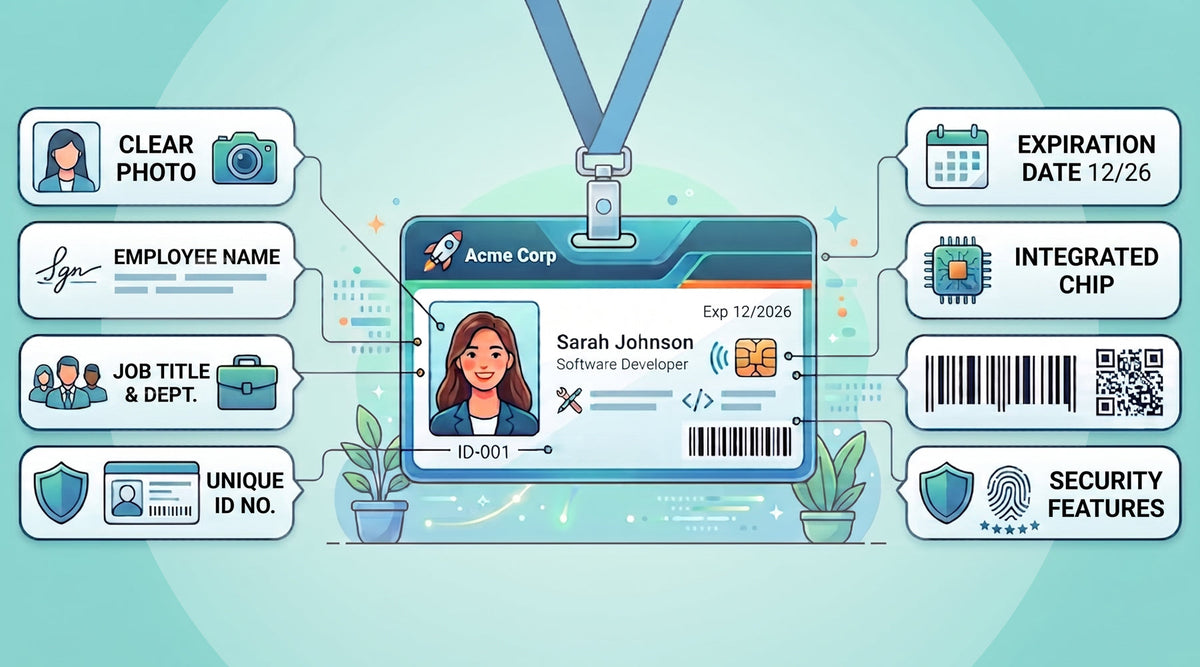
Employee ID cards do more than identify staff; they strengthen security, support operations, and reinforce your brand. When designed correctly, a simple badge becomes a powerful workplace tool.
This guide breaks down the 10 must-have components of an excellent employee ID card, plus how to design them for maximum impact.
What Should Be on an Employee ID Card?
An employee ID card should clearly answer three questions at a glance:
- Who is this person?
- Do they belong here?
- What access or role do they have?
Modern ID cards combine visual identification, essential employee data, and security features to support workplace safety and efficiency.
The 10 Components of an Excellent Employee ID Card
1. Organization Logo (Brand + Security)
Your logo does double duty:
- Reinforces brand identity
- Helps security quickly verify authenticity
A recognizable logo also makes IDs harder to counterfeit, especially when paired with holographic overlays.
2. Thoughtful Design (Clarity Wins)
Great ID cards are both attractive and functional:
- Clean layout
- Easy-to-read fonts
- Strategic use of color
Color-coding (by department or access level) adds instant visual recognition and improves workplace efficiency.
3. Single- or Dual-Sided Layout
Decide how much space you need:
- Single-sided: minimal, quick identification
- Dual-sided: allows additional info like emergency contacts or policies
4. Orientation (Horizontal vs. Vertical)
Orientation affects usability:
- Horizontal = traditional, more space for data
- Vertical = compact, modern feel
Choose based on how employees wear badges and how scanners/readers are used.
5. Employee Photo (Visual Verification)
A high-quality photo is essential:
- Enables instant identification
- Prevents impersonation
This is often the first security checkpoint in any organization.
6. Durability (Built to Last)
ID cards are used daily, so materials matter:
- PVC or composite cards last longer
- Laminates protect from wear and tear
- Use a badge holder for added protection
Durable IDs reduce reprints and maintain a professional look over time.
7. Data Encoding (Smart Functionality)
Modern ID cards go beyond visuals. Add:
- Barcodes or QR codes
- Magnetic stripes
- RFID or smart chips
These features enable access control, attendance tracking, and system integration.
8. Signature (Added Authentication)
A printed employee signature adds another layer of identity verification; this is especially useful in high-security or regulated environments.
9. Enhanced Security Features
Prevent fraud with:
- Holographic overlays
- Microtext or UV elements
- Smart card encryption
Security features help protect your workplace and your employees.
10. Personal Information (Keep It Essential)
Include only what’s necessary:
- Employee name
- Job title
- Department
- ID number
Avoid sensitive data like personal addresses; clear and minimal information is more secure and easier to read.
Why These Components Matter
A well-designed employee ID card helps employees, visitors, and customers feel confident about who belongs. Organizations rely on ID badges as a core part of security and daily operations, not just identification.
Quick Design Checklist
Before finalizing your ID card, ask:
- Is the photo clear and visible?
- Is the name readable at a distance?
- Does the design align with your brand standards?
- Are security features included?
- Is the layout clean and uncluttered?
If you can check all five, you’re on the right track.
Final Thoughts
An employee ID card may seem small, but it has a big job. When you combine clear design, strong branding, and layered security, your ID cards become more than badges; they become a critical part of your workplace strategy.


Leave a comment
All comments are moderated before being published.
This site is protected by hCaptcha and the hCaptcha Privacy Policy and Terms of Service apply.