
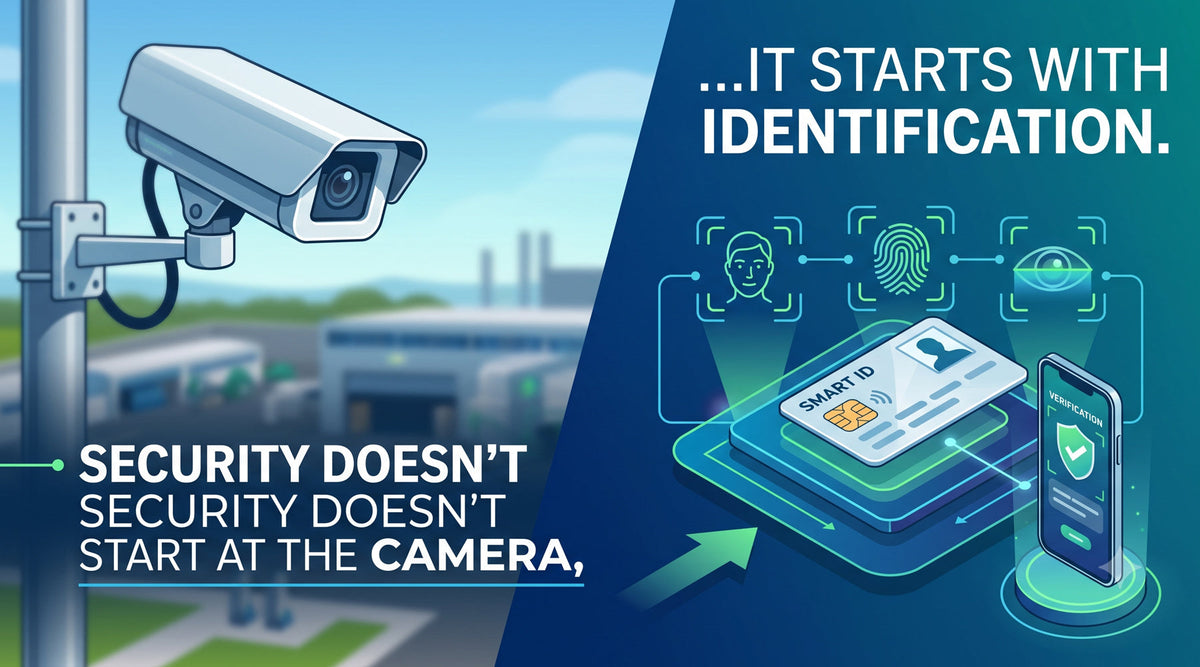
Most organizations view security as a collection of tools, including cameras, alarms, door locks, and software. But here’s the truth:
➡️ Security doesn’t start with cameras. It starts with identification.
Before you can monitor behavior, restrict access, or investigate an incident, you need to answer one simple question:
“Who is this person?”
That’s where modern identification systems—and especially ID badges—come in.
Why Identification Is the Foundation of Security
In any workplace, school, or facility, identification is the first layer of defense. Without it, every other security measure becomes harder and less effective.
An ID badge does more than display a name and photo. It helps you:
- Instantly confirm who belongs in your building
- Assign access rights based on role or status
- Track movement across locations
- Activate or deactivate credentials in real time
When identification is accurate and up to date, everything downstream—from access control to video security gets stronger.
Step 1: Identification — Knowing Who Belongs
Think of identification as your security system’s starting point. A modern ID system allows organizations to:
- Verify identity at a glance
- Link credentials to employees, visitors, or contractors
- Update access automatically when roles change
- Revoke access instantly when needed
Without strong identification, organizations risk shared badges, outdated credentials, and security blind spots—all of which weaken your entire system.
Step 2: Access Control — Managing Where People Go
Once you know who someone is, the next step is controlling where they can go. With ID-based access control systems:
- Doors open only for authorized users
- Access permissions adjust automatically
- Lost or stolen badges can be deactivated immediately
- Activity is logged to create a clear audit trail
Step 3: Video Security — Understanding What Happened
Cameras are powerful—but only when they’re connected to identity and access data. By integrating systems, organizations can:
- Link badge activity directly to video footage
- Verify incidents like tailgating or unauthorized entry
- Investigate events in minutes instead of hours
- Gain real-time visibility across facilities
Without identification, camera footage is just video. With it, it becomes actionable insight.
Why Integrated Security Systems Matter
When identification, access control, and cameras work together, security becomes:
✅ Simpler
✅ Smarter
✅ Faster
✅ Smarter
✅ Faster
Disconnected tools create gaps. Integrated systems create clarity. And in today’s environment, clarity is everything.
The Real Risk of Starting with Cameras
It’s easy to assume cameras are the first line of defense, but that approach has limitations:
- Cameras don’t tell you who someone is
- Footage can be time-consuming to review
- Visibility alone doesn’t prevent unauthorized access
In short, cameras help you see what happened, but identification helps you prevent it in the first place.
Build a Stronger Security Strategy—Start with ID
If you’re looking to upgrade your security system, start at the source:
➡️ Identify every person in your space
➡️ Connect identity to access permissions
➡️ Integrate with video and monitoring tools
➡️ Connect identity to access permissions
➡️ Integrate with video and monitoring tools
Because the most effective security systems don’t just react, they know who belongs before anything happens.
Final Takeaway
Security isn’t just about watching. It’s about knowing. The organizations that build their strategy around identification don’t just improve safety; they create confidence, accountability, and control across every level of their operation.

Leave a comment
All comments are moderated before being published.
This site is protected by hCaptcha and the hCaptcha Privacy Policy and Terms of Service apply.